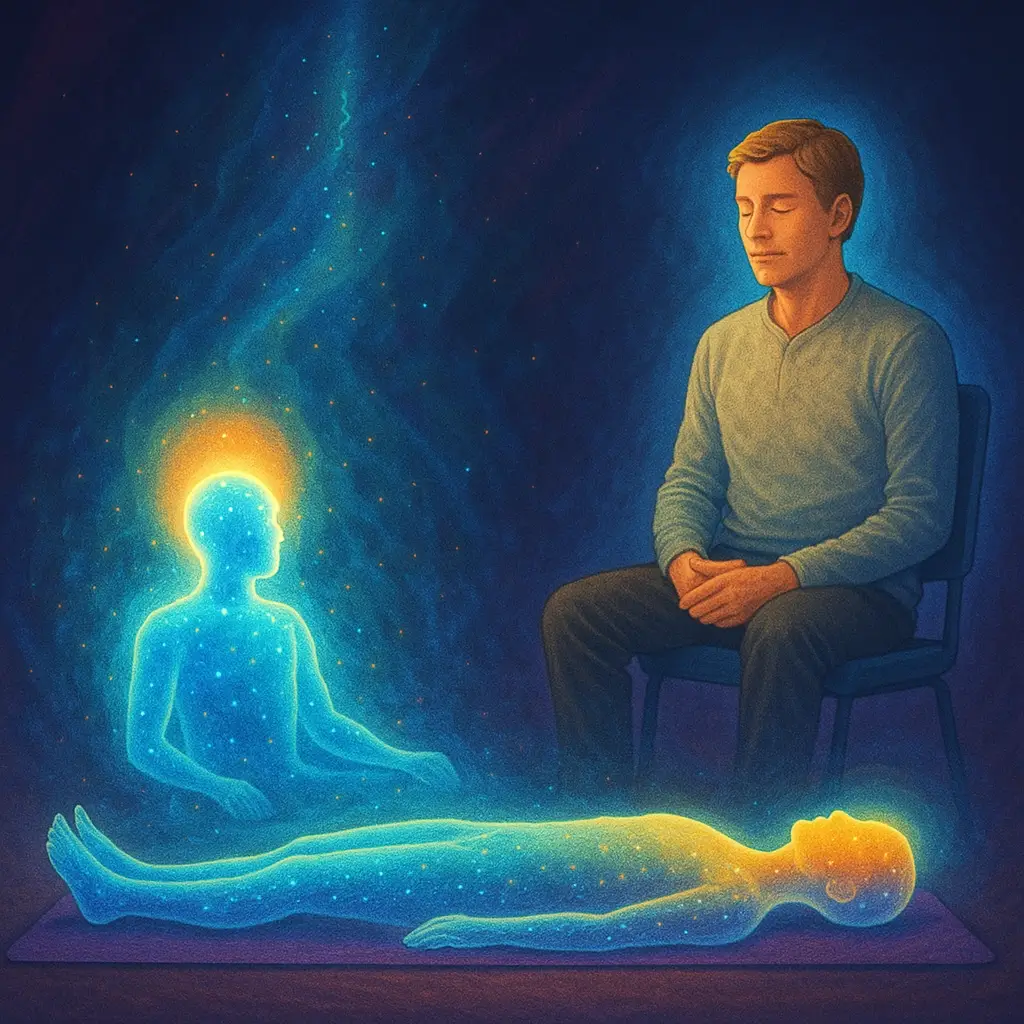
You’ve probably heard the phrase: “One psychedelic journey is like doing years of therapy.” It’s become a kind of slogan in popular discourse about psychedelics and plant medicine. And while it’s true that a single psychedelic experience can open doors of insight, catalyze profound emotional healing, or even initiate spiritual awakening, I believe this phrase—however well-meaning—is misleading.
Healing isn’t a one-time event. It’s a process. A spiral. A return, again and again, to the core of who we are, each time with slightly more awareness and slightly less illusion.
In therapy, it often takes time to begin seeing—and telling ourselves—the truth. One of the most powerful gifts of psychedelic medicines is their way of confronting us with the truth about ourselves. The truth isn’t always comforting. In fact, the truths we most need to see are often those we’ve spent a lifetime avoiding. They live beneath our well-practiced personas, tucked away in the folds of our self-protective narratives—stories that may have once kept us safe, but now keep us stuck.
Therapy—when skillful, attuned, and grounded in a trust that supports vulnerability—can also help us contact this truth. It gives us a container within which to make contact with these parts of ourselves: the abandoned child, the hidden rage, the untold grief, the creative potential. Psychedelics can do this too, sometimes with astonishing speed and depth. But the revelation is only the beginning. What matters most is what happens next.
And this is where the journey really begins.
Integrating what emerges—emotionally, cognitively, spiritually—is the real work. This may include reshaping relationships, making difficult choices, changing careers, grieving lost illusions, or reclaiming long-dormant parts of the self. These are not quick fixes. They require sustained attention, effort, and the development of inner resources: courage, discipline, and, most importantly, the will to change. This is often the most difficult part of the journey—where we feel as though we have none of these qualities, and we berate ourselves for it.
The therapeutic relationship can help with this. It can help you see that you are worth the effort. You can begin to speak to yourself the way you might speak to a close friend if they were in a situation similar to your own. The communal aspect of sitting in a plant medicine ceremony with others committed to looking deeply can also make room for, and support, this kind of self-compassion.
Recent neuroscience offers exciting clues about how psychedelic substances work in the brain. Compounds like psilocybin and LSD are thought to relax the rigid patterns of the brain’s Default Mode Network (DMN), which is associated with our sense of self and habitual thoughts. This loosening may explain the sense of ego dissolution and expanded awareness often reported in these experiences. And yes—this kind of neuroplastic window may open possibilities for re-patterning how we think and feel. But it doesn’t guarantee change. It opens a doorway. We still have to walk through it.
This is why thoughtful preparation and skillful integration are essential. It’s why I always caution against over-romanticizing psychedelics as a cure-all. Without support—therapeutic, somatic, communal, or spiritual—insights can dissipate like dreams upon waking. Worse, they can become destabilizing or even harmful if not handled with care.
And this is also why therapy and psychedelics can be such powerful allies. Both offer us a mirror. Both can help us find the strength to tell ourselves the truth. And both, when engaged with sincerity and respect, can support us in living from that truth.
So if you’re considering working with psychedelics—or already have—I encourage you to view your experience not as the end of your healing journey, but as the beginning of a deeper one.
Above all, be gentle with yourself. The truth isn’t something we force. It’s something we grow into.